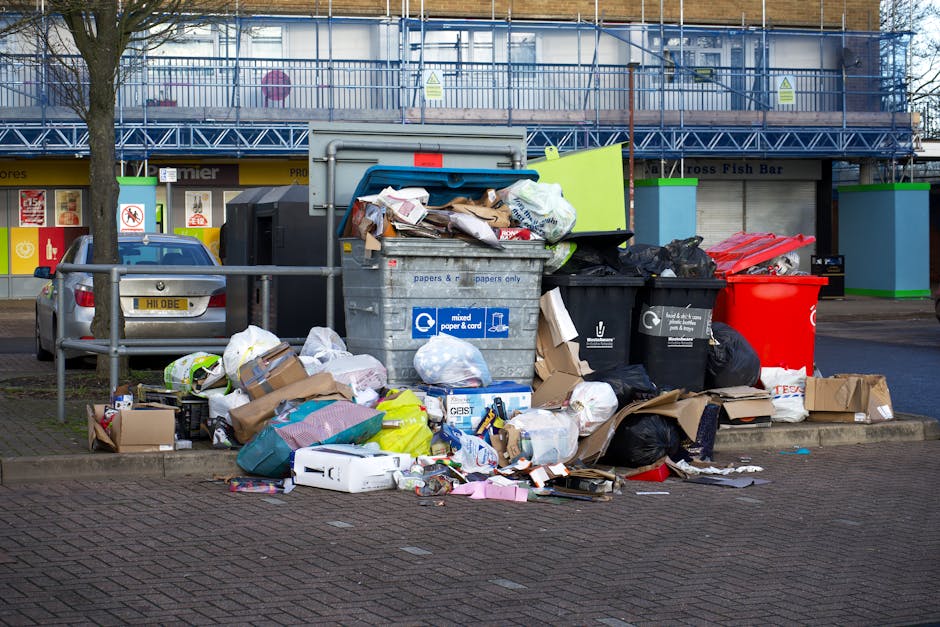
Rubbish removal for Church Road Fleet businesses
If you run a business on or near Church Road in Fleet, rubbish has a funny way of piling up exactly when you are busiest. One day the back office is tidy, the next there are broken boxes, old stock, packaging, office clutter, and a bin area that looks like it has had a rough week. That is where rubbish removal for Church Road Fleet businesses becomes more than a convenience. It helps you keep operations moving, stay presentable to customers, and avoid the awkward scramble of trying to deal with waste after it has already become a problem.
This guide walks through how business rubbish removal works, what it suits best, what to watch out for, and how to choose a sensible approach for your premises. We will keep it practical. No fluff, no nonsense. Just the kind of detail that helps when you need the job done properly.
Why Rubbish removal for Church Road Fleet businesses Matters
For local businesses, waste is not just a back-of-house annoyance. It affects first impressions, staff morale, safety, and how efficiently your site runs. A cluttered yard or a skip that is overflowing can make a good business look a bit tired. And if you are customer-facing, that matters more than people like to admit.
Church Road businesses can include shops, offices, small workshops, salons, professional services, hospitality venues, and trades working from commercial premises nearby. Each one creates different waste streams, but the pressure is similar: you need rubbish moved quickly, without disrupting trading hours or causing more work for your team.
There is also the simple issue of space. In smaller commercial premises, every square metre counts. Old desks, packaging, broken appliances, and renovation waste can clog entrances, storage rooms, and loading areas. Before long, the rubbish is not just ugly; it is getting in the way of business.
Practical takeaway: good rubbish removal is not about "getting rid of stuff" in the abstract. It is about protecting space, time, and reputation. That is the real win.
How Rubbish removal for Church Road Fleet businesses Works
In most cases, business rubbish removal is designed to be straightforward. You identify what needs clearing, decide whether it is general waste, bulky items, or something more specialised, and arrange a collection time that fits your schedule. The best services are flexible. Ideally, they work around your opening hours or quieter periods so staff and customers are not tripping over bags and boxes all day.
A typical job may involve an initial discussion, a rough estimate based on volume or item type, then collection by a team that loads the waste for you. That loading part is important. For busy businesses, the labour saved is often just as valuable as the disposal itself.
For certain waste types, the process needs a little more care. Fridges, appliances, confidential paper, or items that may be classed as hazardous must be separated and handled correctly. If you are not sure what falls into which category, ask before collection. That tiny bit of admin can save a headache later. Honestly, it is one of those things people skip and regret.
Where relevant, some businesses also combine a clearance with a related service. For example, office refurbishments often pair well with office clearance, while hospitality or retail premises may benefit from broader business waste removal to keep day-to-day operations leaner.
Key Benefits and Practical Advantages
The advantages are not complicated, but they are meaningful.
- Less disruption: rubbish is removed in one go rather than lingering for days.
- More usable space: storage rooms, stock areas, and rear access points become functional again.
- Better presentation: a tidy premises feels more trustworthy to customers and staff.
- Safer working environment: fewer trip hazards, fewer blocked routes, and less mess around fire exits.
- Time savings: your team can keep doing their actual jobs instead of becoming part-time waste removers.
- Better handling of awkward items: bulky furniture, appliances, and mixed rubbish can be dealt with in one visit.
There is also a quiet financial benefit. Not always obvious at first glance, but very real. If staff are spending an hour here and there shifting rubbish, that is paid time not going into revenue-generating work. Business owners notice this after the fact. Usually when someone says, "We've been meaning to sort that room for months."
For businesses that are refurbishing, relocating, or simply doing a long-overdue clear-out, linked services can be useful too. If you need to remove old furniture along with general junk, furniture disposal or furniture clearance may fit neatly into the same plan.
Who This Is For and When It Makes Sense
This kind of service is ideal for businesses that generate waste in uneven bursts rather than a perfectly steady stream. That includes a lot of real-world situations.
- Retail shops clearing packaging, damaged stock, display units, or old fittings
- Offices getting rid of desks, chairs, files, equipment, and general clutter
- Landlords and managing agents dealing with commercial units between tenants
- Trades and builders clearing renovation debris after a job
- Hospitality businesses replacing furniture, appliances, or back-of-house items
- Salons, clinics, and service businesses refreshing interiors and removing old fixtures
It also makes sense when you do not want to manage a skip, load waste yourself, or leave material on site for longer than necessary. Some properties simply do not have the space. Others have access issues, parking constraints, or neighbours who will not appreciate a skip sitting outside for several days. Let's face it, not every road is ideal for that.
If you are dealing with renovation debris, a dedicated clearance like builders waste clearance may be the cleaner choice, especially if the mess is mixed, heavy, and awkward to move.
Step-by-Step Guidance
Here is the simplest way to organise rubbish removal without overthinking it.
- Walk the site. Look at what actually needs removing, not what feels annoying in the moment. Separate rubbish into general waste, reusable items, bulky items, and anything special.
- Check access. Think about loading doors, stairs, lifts, parking, and whether the collection team can reach the waste without interrupting trade.
- List the problem items. Broken furniture, old stock, packaging, appliances, paperwork, and repair waste should be noted clearly.
- Flag anything sensitive. Confidential paper, electrical items, or potentially hazardous material should be mentioned early.
- Get pricing information. A clear quote process matters. If you want to compare scopes of work, see the company's pricing and quotes page before you book.
- Choose a collection time. Early morning, after closing, or a quieter midweek slot often works best.
- Prepare the waste. Keep piles together and make sure items are not blocking emergency routes or customer access.
- Confirm the disposal route. If items need special handling, make sure that is understood before the team arrives.
A small bit of preparation goes a long way. You do not need to stage everything like a film set. Just make access obvious and the job becomes smoother, faster, and usually less stressful.
Expert Tips for Better Results
A few habits make commercial rubbish removal noticeably easier.
Plan around trading patterns. If your busiest period is lunch, school pick-up, or the end of the month, do not schedule a disruptive clearance then. The calmest jobs are usually the ones timed with a bit of common sense.
Separate bulky items from general waste. Mixed piles slow everything down. If the team arrives and has to untangle old chairs from packaging and broken shelving, the process becomes slower than it needs to be.
Keep recurring waste under review. If the same corner keeps filling up, the issue may be operational rather than accidental. Perhaps stock arrives in oversized packaging. Perhaps the storage layout is awkward. Perhaps somebody has been quietly using "temporary" as a permanent storage strategy.
Be honest about volume. Underestimating waste is one of the most common causes of frustration. If in doubt, describe the pile in plain language. A decent provider can usually tell the difference between "a few bags" and "a proper vanful."
Use specialist services where needed. A regular rubbish clearance is not always the right answer for everything. For example, fridges and commercial appliances should go through proper appliance handling, while sensitive documents may need confidential shredding. That distinction matters.
Common Mistakes to Avoid
Most waste problems are avoidable. The trouble is, people often realise that after the fact.
- Leaving the booking too late: once rubbish blocks access or impacts customers, the problem has already started costing you time.
- Mixing hazardous and general waste: this can create compliance issues and may delay collection.
- Assuming every item is acceptable: some materials need separate handling, so always check first.
- Ignoring access issues: stairs, narrow lanes, and parking restrictions can change how the job needs to be done.
- Forgetting appliance rules: items like fridges and certain electricals are not just "big rubbish". They need a proper route. If that is relevant, fridge and appliance removal may be more suitable.
- Choosing purely on price: the cheapest option is not always the smoothest or safest one. Sometimes it is, sure. Often it is not.
One other mistake is failing to think about the end result. Not just "Can we remove it?" but "What does the space need to do after the clearance?" If the answer is storage, trading, or customer access, the job should be planned with that in mind.
Tools, Resources and Recommendations
You do not need fancy equipment to prepare for a business clearance, but a few simple tools help:
- marker pens and labels for sorting waste
- heavy-duty bags for smaller mixed rubbish
- a basic inventory list for bulky items
- tape or cones if you need to keep an area clear before collection
- a camera phone for taking quick reference photos
If your business regularly deals with mixed waste, it is worth keeping an internal log of what gets thrown away most often. It sounds dull, admittedly. But after a few months, the pattern becomes obvious. Maybe your delivery packaging is excessive. Maybe damaged stock is recurring. Maybe you keep replacing the same worn-out furniture. That kind of insight can reduce waste at source, which is always better than simply chasing it around.
For businesses that are trying to improve sustainability, the wider approach matters too. The company's recycling and sustainability information is worth reviewing alongside any clearance plan, especially if you want to separate reusable, recyclable, and residual waste more intelligently.
Law, Compliance, Standards, or Best Practice
Commercial waste handling in the UK should be treated carefully. You do not need to become a legal expert, but you do need to know the basics: businesses remain responsible for how their waste is stored, transferred, and handed over. That means choosing a provider that understands proper disposal routes and can work in line with accepted UK waste practices.
For many businesses, the practical standard is simple: keep waste separated where you can, store it safely, and do not leave it accessible to the public or blocking emergency routes. If your business produces materials that could be harmful, sharp, contaminated, or otherwise risky, treat those items differently and ask for guidance.
Health and safety matters too. Heavy lifting, sharp edges, broken furniture, and awkward access can all create avoidable risk if a clearance is rushed. It is sensible to review the provider's health and safety policy and insurance and safety approach if the job involves larger items or complicated access.
If you are dealing with anything that may be hazardous, do not guess. Use a proper hazardous route or ask for specialist handling. The same goes for anything confidential or business-sensitive. A stack of old invoices or customer paperwork is not just clutter. It is data. Treat it that way.
There are also internal standards worth noting. Clear communication, accurate item descriptions, and agreed collection windows are not paperwork for the sake of paperwork. They are what stop a clear-out from turning into a muddle.
Options, Methods, or Comparison Table
Businesses usually choose between a few approaches. The right one depends on volume, access, timescale, and whether the waste is mixed or specialist.
| Method | Best for | Pros | Trade-offs |
|---|---|---|---|
| Man-and-van style rubbish removal | Mixed waste, bulky items, one-off clearances | Fast, flexible, labour included | May be less ideal for very large volumes |
| Skip-based disposal | Longer projects with steady waste output | Useful if waste builds over time | Needs space, permits may apply, loading is on you |
| Specialist clearance services | Offices, furniture, appliances, or distinct waste types | Better suited to specific items and heavier loads | May require more planning if several waste types are involved |
If you are unsure, think about the job, not the label. A small office refresh may need furniture removal more than general rubbish collection. A store room overhaul may need a broader waste removal service. A building project may lean toward what can go in a skip guidance if you are weighing up disposal options.
The right method is the one that gets the waste gone with the least disruption and the fewest surprises. Simple as that.
Case Study or Real-World Example
Picture a small Church Road business preparing for a refurb. The team has old chairs, packaging from new stock deliveries, a broken filing unit, a fridge that has stopped working, and several bags of general clutter that have somehow accumulated in the back room over two years. The customer area still needs to stay presentable, and the staff cannot afford a full-day shutdown.
In a situation like that, a sensible approach is to split the waste into clear categories before collection. General clutter goes together. Furniture is identified separately. The appliance is flagged in advance. Any paperwork is checked for sensitivity. The booking is arranged outside customer-facing hours, and access is kept clear.
The result is usually better than people expect. The room feels larger. The staff stop sidestepping boxes. The manager gets that small but satisfying sense that the business can breathe again. You know the feeling. A cleared space has a different sound to it. Quieter, somehow.
That is the real value of well-organised rubbish removal. Not just the disposal itself, but the reset that comes with it.
Practical Checklist
Use this before you book a collection:
- Identify what needs removing and what can stay
- Separate general waste from furniture, appliances, and special items
- Check whether anything may be hazardous or confidential
- Measure access points if bulky items are involved
- Make a note of stairs, loading bays, parking restrictions, or time limits
- Choose a collection window that avoids peak customer traffic
- Review pricing, scope, and what is included
- Confirm how the waste will be handled after collection
- Prepare the site so the team can load quickly
- Keep a record of recurring waste issues for next time
If you want a quick route to booking, you can also use the company's book online option once you have a clear idea of the job.
Conclusion
Rubbish removal for Church Road Fleet businesses is really about keeping your working environment efficient, safe, and ready for customers. Whether you are clearing office clutter, broken furniture, stock packaging, or renovation waste, the smartest approach is always the same: plan a little, separate waste sensibly, and choose a service that fits the way your business actually operates.
Do that, and a messy corner stops being a drain on your day. The whole place feels more manageable. And, to be fair, that is usually worth more than people realise.
Get a free quote today and see how much you can save.
Frequently Asked Questions
What counts as business rubbish on Church Road in Fleet?
Business rubbish can include office waste, packaging, old furniture, broken fixtures, stock waste, appliances, and general clutter from commercial premises. If you are not sure whether something should be treated as general waste or specialist waste, ask before collection.
Is rubbish removal better than hiring a skip for a small business?
Often, yes, if you want labour included and do not have space for a skip. A collection service is usually simpler for one-off clear-outs, awkward items, or sites with limited access. A skip can still make sense for longer projects.
Can you remove office furniture and general rubbish at the same time?
Yes, that is common. Many businesses combine furniture clearance with mixed rubbish removal so the site is cleared in one visit rather than piecemeal.
How do I prepare my premises before collection?
Make the waste accessible, separate obvious categories, keep walkways clear, and flag any fragile, confidential, or awkward items. A little prep makes the job smoother and usually quicker.
What if I have appliances like fridges or freezers?
Appliances should be mentioned in advance because they may need specialist handling. Fridges, in particular, are not just bulky waste. They need the right disposal route.
Do I need to separate recyclable material?
It helps if you can. Separation can make disposal more efficient and supports better recycling outcomes. If mixed waste is unavoidable, say so upfront so the provider can plan accordingly.
Can rubbish removal be done outside business hours?
In many cases, yes. Early mornings, evenings, or quieter periods are often best for customer-facing premises. It depends on access and the size of the job.
What should I do with confidential paperwork?
Do not place it in general rubbish. Use a dedicated confidential shredding service so sensitive documents are handled properly.
How do I know if waste might be hazardous?
If it includes chemicals, contaminated materials, sharp clinical-type waste, or anything you are uncertain about, treat it cautiously and ask for advice before collection. When in doubt, do not mix it with general rubbish.
Is business waste removal suitable for a one-off shop refit?
Absolutely. Shop refits often generate mixed waste, old fixtures, and bulky items that are awkward to move. A one-off clearance is often the most efficient solution.
What is the main benefit for small businesses?
The biggest benefit is usually time and space. You get the rubbish gone without tying up your staff, and your premises feel instantly easier to work in.
Where can I learn more about the company behind the service?
You can read the company's about us page to understand its approach, and if you have a specific question, the contact us page is the best place to start.